
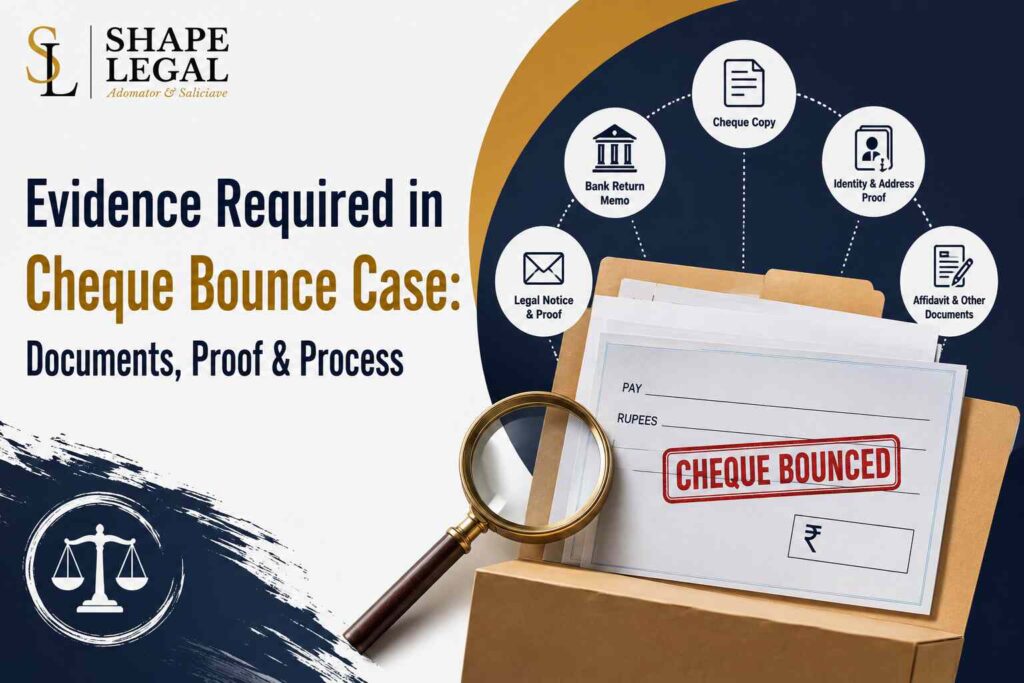
If a cheque is dishonoured, the cheque itself is only one part of the case. The evidence required in cheque bounce case may include the original cheque, bank return memo, legal notice, proof of service and documents connected with the underlying debt or liability.
However, as per Section 138 of the Act of 1881, there are certain specific conditions that have to be met for a cheque to bounce. Further, as per Section 139 of the Act, there is a statutory presumption that exists in favor of the drawer of the cheque, and this can be rebutted by the accused.
What Evidence Do You Need for a Cheque Bounce Case?
The evidence required in cheque bounce case depends on the facts of the transaction and the issues raised by the accused. Commonly relevant documents include:
- Original cheque
- Bank return memo
- Statutory demand notice
- Proof of sending or delivery of notice
- Bank statements and transaction records
- Agreements, invoices or receipts, where applicable
- Relevant emails, messages or correspondence
- Other admissible documentary or electronic evidence
The documents should tell a consistent story about the cheque, the dishonour and the transaction behind it.
Original Cheque and Bank Return Memo
The original cheque is very relevant to the case since it provides the foundation for the complaint made under Section 138. The number of the cheque, the cheque amount, the date, and the drawer’s account can be used to identify the cheque.
The bank return memo is also important because it records the dishonour. Section 146 of the Negotiable Instruments Act gives evidentiary value to a bank slip or memo bearing the official mark showing dishonour.
Legal Notice and Proof of Service
A statutory demand notice is another important part of a cheque bounce matter. Under Section 138, the payee or holder in due course generally has to make a written demand within 30 days of receiving information about the dishonour. The drawer gets 15 days from receipt of the notice to make payment.
Therefore, keep a copy of the legal notice along with the postal receipt, tracking details, delivery confirmation or other relevant proof of service.
The evidence required in cheque bounce case can include these records because they help demonstrate that the statutory notice process was followed.
Evidence of the Underlying Debt
Section 138 concerns a cheque issued towards a legally enforceable debt or liability. Evidence relating to the underlying transaction can therefore become important.
Depending on the circumstances, this may include:
- Loan or transaction agreements
- Invoices and bills
- Receipts
- Bank transfer records
- Ledger or account entries
- Acknowledgment of liability
- Relevant correspondence
A written agreement is not necessarily the only evidence of a transaction. The court considers the available material along with the statutory presumptions and the defence raised by the accused.
Can Bank Statements, Emails or WhatsApp Messages Be Used?
Yes, they may be relevant when they help establish a payment, transaction, acknowledgment or other disputed fact.
Bank statements can help show financial transactions, while emails and WhatsApp messages may provide context about the underlying dealing. However, electronic records must meet the applicable requirements for admissibility.
It is better to preserve complete records rather than relying only on cropped screenshots or selected messages.
What Evidence Can the Accused Use?
Evidence is not limited to the complainant. The accused may challenge the alleged debt, transaction, cheque issuance, amount claimed or compliance with statutory requirements.
Section 139 creates a presumption in favour of the holder, but it is rebuttable. The Supreme Court has explained that the accused can rebut the presumption by raising a legally permissible defence and relying on appropriate material.
The evidence required in cheque bounce case can therefore vary considerably depending on the defence being raised.
What Happens During the Evidence Stage?
As per Section 145 of the Negotiable Instruments Act, the evidence of the complainant can be given in the form of an affidavit according to the process followed in that case. The cross-examination becomes relevant if the accused contests the case or the evidence of the complainant.
There is a Criminal Advocate in Janakpuri who can help you review the documents and present the evidence in the case.
Where Does Evidence Fit in a Cheque Bounce Case?
The evidence stage is only one part of a cheque bounce case. Before reaching this stage, the matter usually involves the cheque being dishonoured, sending the statutory notice and filing the complaint. The case can then move through different court stages depending on the facts and how the parties respond.
If you want to understand what happens at each stage and how long the overall matter may take, you can read our detailed guide on How Long Does a Cheque Bounce Case Take in India? Complete Timeline & Process.
This gives readers a broader understanding of the cheque bounce case timeline and process, while this article focuses specifically on the documents and evidence that may be needed.
How Should You Organise Your Documents?
Before approaching the court or a lawyer, keep all relevant records together. A basic file should contain:
- Original cheque
- Bank return memo
- Legal notice
- Proof of service
- Transaction and payment records
- Relevant emails or messages
It is also useful to note the important dates, including cheque presentation, dishonour, notice and payment-related communications.
At Shape Legal, clients can discuss their documents and understand the legal options available for their particular matter.
Evidence Required in a Cheque Bounce Case in Delhi
If your matter is being handled in Delhi, having the relevant documents organised can make legal review easier. The court process and facts of each matter still need to be considered individually.
A Criminal Lawyer in Janakpuri can help review the available records and explain what evidence may be relevant to the case.
You can also visit the Google Business Profile of Shape Legal to get more details about their business, its location, and even customer reviews.
Conclusion
The evidence required in cheque bounce case is not limited to the dishonoured cheque. The original cheque, bank return memo, legal notice, proof of service and records relating to the underlying transaction may all be important.
Keeping these documents organised from the beginning can make it easier to present the facts and respond to issues raised during the proceedings.
For legal assistance, Shape Legal can be contacted through its Contact Us page.
Frequently Asked Questions
What evidence is required in a cheque bounce case?
The evidence required in cheque bounce case commonly includes the original cheque, bank return memo, statutory notice, proof of service and documents supporting the underlying debt or liability.
What documents are required for a cheque bounce case?
Common documents include the cheque, bank return memo, legal notice, proof of service and relevant transaction records. Additional documents depend on the facts.
Is the original cheque required?
The original cheque is an important document in a Section 138 proceeding. Its production and evidentiary treatment depend on the circumstances and applicable procedure.
Is the bank return memo important?
Yes. It can help establish that the cheque was dishonoured and may record the reason for its return. Section 146 specifically addresses its evidentiary value.
Can WhatsApp messages or emails be used as evidence?
They may be relevant, provided they satisfy the applicable requirements for electronic evidence and are relevant to the dispute.
Can a cheque bounce case be filed without a written agreement?
No written agreement necessarily determines the outcome of the matter. The court weighs all the evidence, statutory presumptions, and the defense raised.
What evidence can the accused use?
The accused may rely on relevant bank records, correspondence, repayment records, agreements or other admissible material to challenge the complainant’s case or rebut applicable presumptions.